Quick answer
PTFE-coated fiberglass combines a low-friction release face with woven glass reinforcement. Shortlist closed coated cloth for a supported release surface and open mesh when passage through the liner is required. Check the finished construction: an adhesive, seam or exposed edge can affect the operating limit and service behaviour.
01 / PTFE material guide
What the coating and the glass each do
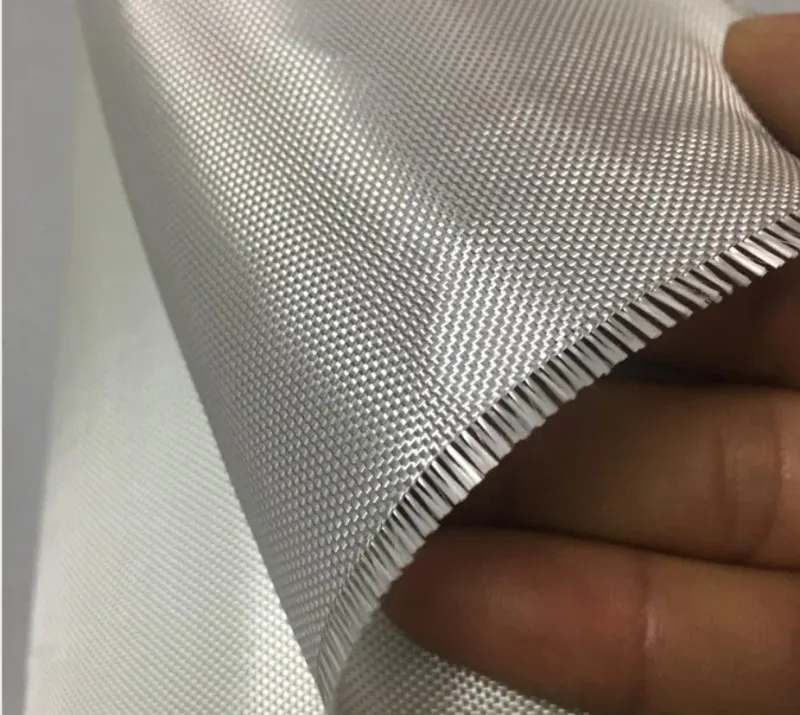
The PTFE face helps a contacting product separate or slide. Inside the sheet, woven glass yarns support the coating and limit stretch. Roll the fabric around broad curves rather than forcing it into a sharp fold.
The weave pattern can remain visible through a closed coating. To establish whether the material has through-openings, inspect the actual construction rather than relying on a photograph of its texture.
02 / PTFE material guide
Choose the format around the job
| Job | Starting format | Check before ordering |
|---|---|---|
| Supported release liner | Closed PTFE-coated glass fabric or a cut baking liner. | Coverage, finished thickness, edge support and removal method. |
| Heat-sealing contact layer | PTFE-coated fabric with the attachment required by the equipment. | Contact temperature, dwell, pressure and backing or adhesive. |
| Airflow through a tray or conveyor | Open PTFE-coated mesh. | Clear openings, product retention, support and any joints. |
| A mat that must grip its support | Compare a silicone-coated mat as an alternative. | Release and resistance to sliding are different requirements. |
03 / PTFE material guide
SIFMAT PTFE fabric and mat specifications
Choose fabric for conversion into a liner or part, or a baking mat for a tray application. Compare the thickness, finished dimensions and attachment method together; adding an adhesive or seam changes the construction.
| Product | Thickness options | Temperature range | Working surface |
|---|---|---|---|
| PTFE Coated Glass Fabric | 0.08mm, 0.13mm, 0.18mm, 0.25mm, 0.35mm, 0.40mm or custom thickness | -70°C to 260°C | Smooth PTFE coated surface with low friction and non-stick finish |
| PTFE Baking Mat | 0.13mm, 0.18mm, 0.25mm, 0.35mm or custom thickness | Up to 260°C depending on material grade and application | Textured PTFE coated non-stick surface |
Select the product family first, then specify the finished size, tolerance and operating conditions for your order. Adhesives, printing and edge treatments may affect the finished part’s suitability.
04 / PTFE material guide
Read a temperature rating with the full assembly in mind
Describe both the temperature and how heat reaches the liner. Oven air, contact with a hot plate and a brief sealing cycle place different demands on the part. Include the exposure time and the limits of any backing, joints or printing.
For heat sealing, identify the part of the machine the liner covers and the method used to retain it. During a trial, record the sample reference with the settings and inspection results so a successful construction can be reordered.
05 / PTFE material guide
Inspect the contact surface and edges
- Check for creases, coating wear and exposed yarns before use.
- Use the cleaning method specified for the finished product; the coating, fabric and adhesive may have different compatibility limits.
- Remove a damaged contact liner from service. Compare the wear location with the equipment support and movement.
- Record service conditions when requesting a replacement; changing thickness alone may not solve the cause of damage.
06 / PTFE material guide
Common buying questions
| Question | Answer |
|---|---|
| Is PTFE the same as Teflon? | PTFE is the polymer name. Teflon is a Chemours trademark; a PTFE product description does not establish that a branded resin was used. |
| Does glass fabric mean open mesh? | No. Closed coated cloth and open mesh are different constructions. Specify clear openings when passage through the material matters. |
| Does the fabric rating cover an adhesive backing? | Not automatically. The final part must be selected for the backing and its exposure as well as the working face. |
Your next step
Specify Your PTFE Liner
Include the equipment, finished size, attachment method, temperature cycle, contact product and quantity. Identify the current liner if you are replacing a part.
Specify Your PTFE Liner