Five rolls, one grade
10 m² total
100 mm × 20 m × 5 rolls
= 0.10 × 20 × 5 = 10 m².
Reaches the standard-material slitting minimum. Approve the parent-roll layout and core size with the quote.
PTFE-coated fiberglass / Custom supply
Slit rolls from 10 m².
Cut sheets from 50 pieces.
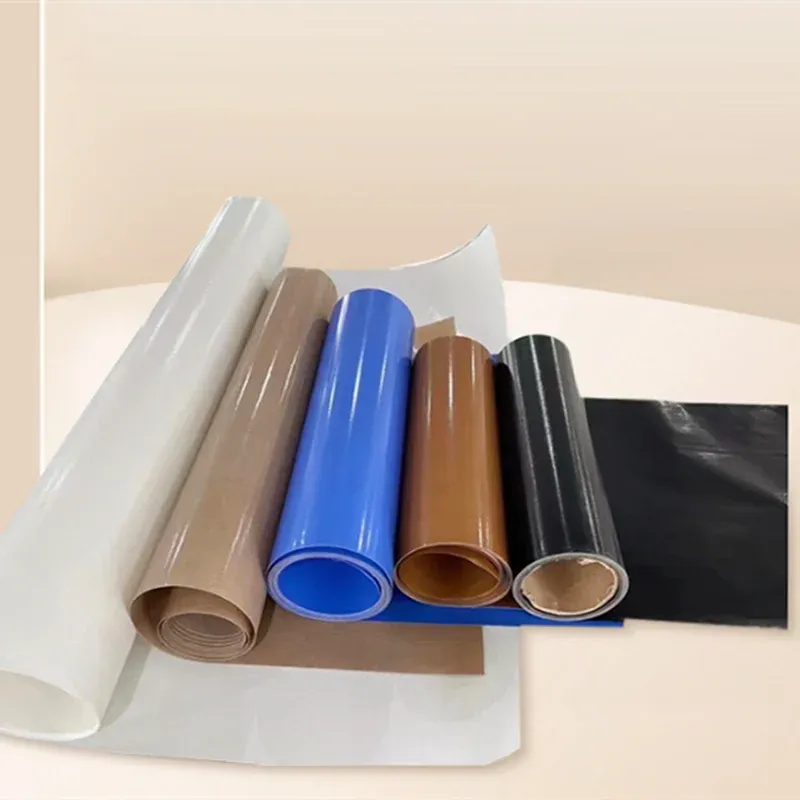
Order PTFE-coated fiberglass fabric as narrow rolls, fitted release sheets or cut parts. SIFMAT supplies custom formats for heat-sealing equipment, packaging lines and process liners, with specialty grades and OEM packaging specified to match the order.
01 / Order quantities
PTFE fabric minimum order quantity (MOQ) depends on the material grade and conversion work. Cutting from an existing roll starts with a smaller order. A new thickness, weave, coating weight or color requires a production batch.
Starting MOQ guide: quantities below are planning minimums. The quotation confirms material availability, cutting yield and the minimum per specification. This guide covers PTFE-coated fiberglass fabric; mesh belts and molded PTFE parts require a separate specification.
Use an existing material grade and change the finished format.
| Custom option | Starting MOQ | What to specify |
|---|---|---|
| Standard thickness or existing color | 10 m² | Select an available grade. State thickness, color and total area. |
| Custom width by slitting | 10 m² | Specify finished width and length for every roll. The parent roll must accommodate the cutting layout. |
| Custom roll length or paper core | 1 roll | Confirm width, length, material grade and core inside diameter together. Material-area minimums still apply. |
| Rectangular cut-to-size sheets | 50 pcs | Per finished size. Send length × width and dimensional tolerances. |
| Custom shapes, rounded corners or holes | 100 pcs | Per drawing. Define radii, hole positions and tolerances; tooling is quoted separately. |
Select a defined grade for the working surface, electrical requirement or mounting method.
| Custom option | Starting MOQ | What to specify |
|---|---|---|
| Existing adhesive-backed PTFE fabric | 10 m² | State adhesive side, finished dimensions and installation surface. Slit-roll format starts at one roll, with the area minimum checked separately. |
| Standard black anti-static grade | 50 m² | Specify the required surface resistance and test conditions. Black color alone does not establish anti-static performance. |
| Existing double-sided coating option | 50 m² | For a specified coating construction outside the standard-stock selection. Identify the grade and both working surfaces. |
| Existing one-sided PTFE coating | 100 m² | Define which side faces the product and how the uncoated side will be used. |
| Premium smooth, electrical or low-pinhole grade | 100 m² | Select the relevant grade and acceptance criteria. These are separate specifications, not interchangeable labels. |
| Special adhesive system or treated bonding surface | 100 m² | Define adhesive thickness, bond requirements, exposure conditions and the surface to be bonded. |
These changes require a production batch instead of conversion from an existing roll.
| Custom option | Starting MOQ | What to specify |
|---|---|---|
| New thickness or thickness tolerance | 500 m² | Specify the finished coated thickness and tolerance, not only the glass-fabric thickness. |
| Custom PTFE coating weight | 500 m² | State the coating weight or the surface property you need, plus an approved reference if available. |
| New fiberglass weight or weave | 500 m² | Define base-fabric weight, weave and required finished construction. |
| Special seamless parent-roll width | 500 m² | State the usable full width and whether joins are allowed. Production feasibility is reviewed before quoting. |
| New anti-static or surface construction | 500 m² | Define measurable performance, test method and operating conditions. |
| Special color matching | 500 m² / color | Provide a physical color reference. Approve the color on the selected coated fabric before production. |
Packaging minimums apply per artwork and pack size, separately from the material order.
| Custom option | Starting MOQ | What to specify |
|---|---|---|
| Standard roll or sheet packing | 1 roll / 50 pcs | Confirm rolls or sheets per pack and protection for transport. |
| OEM roll or pack labels | 100 labels | Provide the logo, item reference, dimensions and barcode artwork. |
| Printed sleeves, header cards or retail inserts | 1,000 pcs | Per printed design. Specify the number of sheets or rolls in each retail pack. |
| Custom printed color boxes | 3,000 boxes | Per box design and size. Approve the dieline and packed sample. |
| Branded shipping cartons | 100 cartons | Confirm carton dimensions, print layout and units per carton. |
02 / Two different production routes
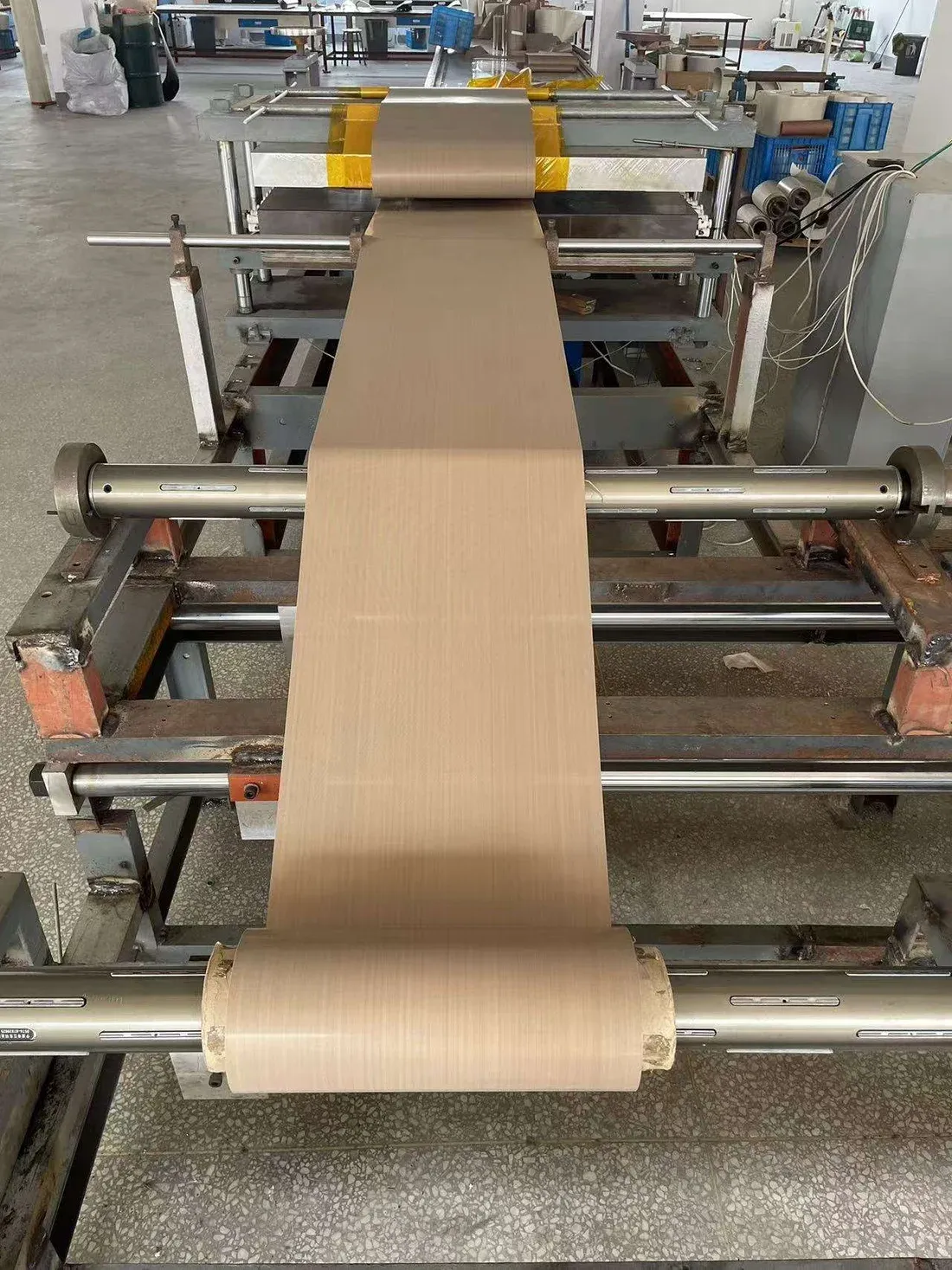
For a 150 mm strip, we first check whether an existing parent roll can be slit to the required width. Keep the grade unchanged and the starting minimum is 10 m².
A request for a seamless 1,680 mm usable width follows a different route when the available parent roll is narrower. It requires a suitable glass-fabric width and coating setup. The starting batch is 500 m², with the full-width construction reviewed before acceptance.
Select a stocked grade and specify the finished dimensions. Standard material starts at 10 m².
A requirement such as 0.165 ± 0.01 mm needs a construction review. New thickness production starts at 500 m².
03 / Select the working surface
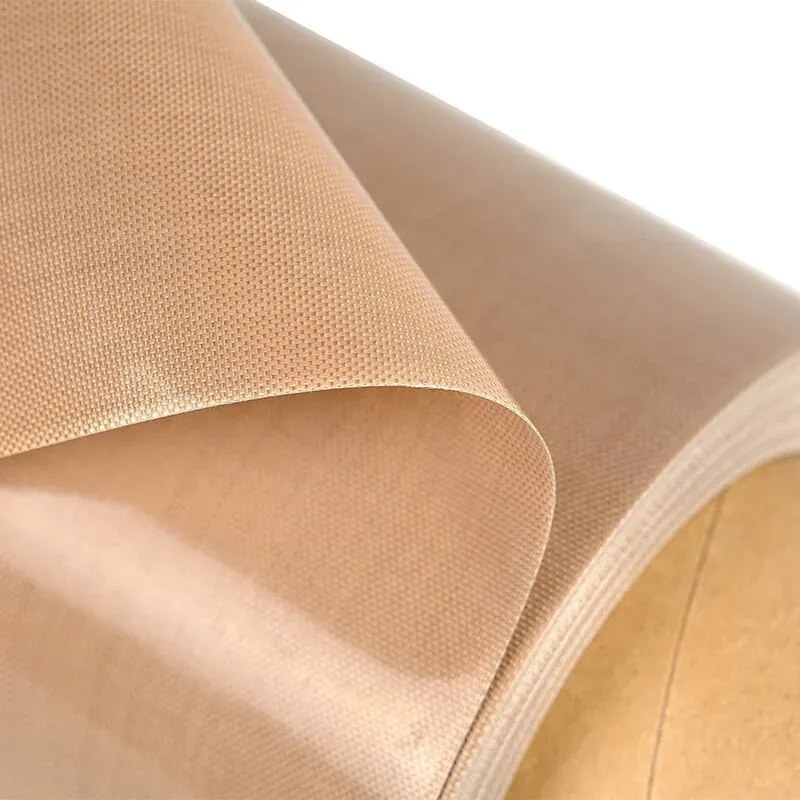
Start with the contact surface and operating cycle. Include temperature, exposure time, pressure, movement and cleaning conditions. These details distinguish a release sheet from an adhesive-backed strip or an electrical-grade component.
04 / Count the order correctly
Roll area = width in meters × length in meters × number of rolls. Finished sheet area helps compare material usage, but the per-size cutting minimum and cutting waste are checked separately.
10 m² total
100 mm × 20 m × 5 rolls
= 0.10 × 20 × 5 = 10 m².
Reaches the standard-material slitting minimum. Approve the parent-roll layout and core size with the quote.
50 pieces / 6 m² finished area
300 × 400 mm × 50 sheets
= 0.30 × 0.40 × 50 = 6 m².
Reaches the rectangular-sheet cutting minimum. The selected grade, material allocation and trim waste determine the final quote.
500 m² per color
At a 1 m usable width, 500 m² equals 500 linear meters before conversion.
A second custom color has its own 500 m² minimum. Approve the coated color sample and packaging separately.
05 / Sample to production
A clear specification keeps the sample and production batch comparable. Agree the drawing revision, material grade and packing format before production begins.
Provide a drawing, dimensioned sketch or sample reference. State units, tolerances, hole positions and quantity per size.
Review material, cutting yield, MOQ, tooling, packaging and sample charges. Confirm the production and shipping schedule.
Check fit, release, mounting and handling in the intended process. Record the results against the agreed acceptance criteria.
Confirm the final grade, drawing, quantity breakdown, labels and packing. Use the approved sample as the batch reference.
Buyer questions
Starting MOQ is 10 m² for standard grades and custom-width slitting, 50 pieces per size for rectangular sheets, and 100 pieces per drawing for custom shapes or holes. New material constructions start at 500 m². The quotation confirms the minimum for the complete specification.
No. Slitting an existing parent roll to a narrower width starts at 10 m². A new seamless parent-roll width requires a different production setup and starts at 500 m², after feasibility review.
Material orders use square meters: width in meters × length in meters × roll quantity. Cut sheets use pieces per size or drawing. Packaging uses labels, packs, boxes or cartons. A linear meter only defines area when the roll width is also stated.
Yes. Custom roll length starts at one roll. The specified width and length must also meet the selected material minimum. A 500 mm × 20 m roll contains 10 m²; a 100 mm × 20 m roll contains 2 m².
List each size, grade, color and drawing separately. Compatible slit widths from one parent-roll grade can be reviewed together in the cutting layout. Sheet and shape minimums apply per size or drawing, and special color matching starts at 500 m² per color.
Yes. Existing adhesive-backed fabric starts at 10 m². Specify the surface being covered, the adhesive side, temperature and exposure time. Special adhesive systems start at 100 m² and require approval of the bond and finished construction.
No. Order an identified anti-static grade and define the required surface resistance and test conditions. Standard black anti-static grades start at 50 m²; a new specified anti-static construction starts at 500 m².
Yes. Request a material sample or a cut prototype and provide the intended application. Sample size, cost and preparation time are confirmed in the quotation. Approve fit, surface performance and the final drawing before ordering the production batch.
Material grade, area, cutting yield, fabrication, tooling and packaging determine the quotation. Stock conversion and a new coating batch follow different schedules. Send the specification, quantity breakdown, destination and required arrival date so sample and production timing can be quoted together.
Request a specification & quote
Include these details to receive a material and conversion quotation:
For an existing replacement part, include the equipment model and current material reference in your message.